497K: Summary Prospectus for certain open-end management investment companies filed pursuant to Securities Act Rule 497(K)
Published on October 27, 2026
|
Ticker Symbol: PSQO Palmer Square Credit Opportunities ETF |
|
|
Summary Prospectus |
October 30, 2026 |

Before you invest, you may want to review the Fund’s prospectus, which contains more information about the Fund and its risks. You can find the Fund’s Statutory Prospectus and Statement of Additional Information and other information about the Fund online at https://etf.palmersquarefunds.com/funds/us-etfs/palmer-square-credit-opportunities-etf. You may also obtain this information at no cost by calling 1-800-736-1145 or by sending an e-mail request to investorrelations@palmersquarecap.com. The Fund’s Prospectus and Statement of Additional Information, both dated October 30, 2026, as each may be amended or supplemented, are incorporated by reference into this Summary Prospectus.
Investment Objectives
Palmer Square Credit Opportunities ETF (the “Fund”) seeks a high level of current income. As a secondary objective, the Fund seeks long-term capital appreciation.
Fees and Expenses of the Fund
This table describes the fees and expenses you may pay if you buy, hold, and sell shares of the Fund. You may pay other fees, such as brokerage commissions and other fees to financial intermediaries, which are not reflected in the table and example below.
|
Annual Fund Operating Expenses* |
||
|
Management fees |
0.50% |
|
|
Other expenses |
0.00% |
|
|
Acquired Fund Fees and Expenses(1) |
0.01% |
|
|
Total Annual Fund Operating Expenses |
0.51% |
|
* The Investment Advisory Agreement provides that the investment advisor will pay, or require a sub-advisor or affiliate to pay, all operating expenses of the Fund except for advisory and sub-advisory fees, excluding interest charges, loan commitment fees and other fees and expenses on any borrowings, dividends and other expenses on securities sold short, taxes, brokerage commissions and other expenses incurred in placing orders for the purchase and sale of securities and other investment instruments, acquired fund fees and expenses, accrued deferred tax liability, distribution and shareholder servicing fees, and the Fund’s share of litigation expenses and other non-routine or extraordinary expenses.
1 Acquired Fund Fees and Expenses are indirect expenses incurred through the Fund’s investments in other investment companies, including money market funds used for cash management purposes.
Example
This example is intended to help you compare the cost of investing in the Fund with the cost of investing in other mutual funds. The example assumes that you invest $10,000 in the Fund for the time periods indicated and then redeem all of your shares at the end of those periods. The example also assumes that your investment has a 5% return each year and that Fund’s operating expenses remain the same.
1
Although your costs may be higher or lower, based on these assumptions your costs would be:
|
One Year |
Three Years |
Five Years |
Ten Years |
|
$52 |
$164 |
$285 |
$640 |
Portfolio Turnover
The Fund pays transaction costs, such as commissions, when it buys and sells securities (or “turns over” its portfolio). A higher portfolio turnover may indicate higher transaction costs and may result in higher taxes when Fund shares are held in a taxable account. These costs, which are not reflected in annual fund operating expenses or in the example, affect the Fund’s performance. During the most recent fiscal year, the Fund’s portfolio turnover rate was 84% of the average value of its portfolio.
Principal Investment Strategies
Under normal circumstances, the Fund invests at least 80% of its net assets (plus any borrowings for investment purposes) in credit-related investments (the “80% Policy”). For purposes of the 80% Policy, credit-related investments are debt securities and obligations of, and other instruments that are secured by or provide economic exposure to the credit of, one or more issuers or borrowers, and include (i) collateralized debt obligations (“CDOs”), collateralized loan obligations (“CLOs”) and other similar types of asset-backed and mortgage-backed securities of various tranches or classes, (ii) corporate bonds, notes and debentures, (iii) securities issued or guaranteed by the U.S. government, its agencies, instrumentalities or sponsored entities, (iv) senior secured floating rate and fixed rate loans or debt, (v) second lien or other subordinated or unsecured floating rate and fixed rate loans or debt, and (vi) derivatives with similar economic characteristics.
The Fund may invest in credit-related investments of any maturity and credit quality, including securities rated below investment grade and unrated securities determined by the Fund’s investment advisor to be of comparable credit quality (commonly referred to as “high yield securities” or “junk bonds”). The Fund may invest a significant portion of its assets in one or more investment types. Some of the loans in which the Fund may invest or get exposure to through its investments in CDOs, CLOs or other types of structured securities may be “covenant lite” loans. The Fund may invest in both U.S. dollar denominated and non-U.S. dollar denominated loans and securities, as well as securities of foreign issuers.
Asset-backed securities are pass-through certificates and other instruments secured by financial, physical and/or intangible assets. Such assets may include loans or leases secured by motor vehicles or other equipment, consumer receivables from sources such as credit cards or student loans, or cash flows from operating assets such as royalties and leases. Mortgage-backed securities in which the Fund may invest include those issued or guaranteed by federal agencies and/or U.S. Government sponsored instrumentalities, such as the Government National Mortgage Administration (“Ginnie Mae”), the Federal Housing Administration (“FHA”), the Federal National Mortgage Association (“Fannie Mae”) and the Federal Home Loan Mortgage Corporation (“Freddie Mac”). The Fund may also invest in commercial mortgage-backed securities (“CMBS”) and collateralized mortgage-backed securities (“CMOs”) issued or guaranteed by private entities.
For the purposes of achieving the Fund’s investment objectives, hedging risks, and enhancing liquidity, the Fund may also employ derivatives, such as: puts and calls on U.S. Treasury futures; options, swaps, and other interest rate derivatives; and credit default swaps on selected entities or indexes (where the Fund may act as either buyer or seller). The Fund’s investments in derivatives and other synthetic instruments that function as a substitute for credit-related investments in which the Fund may invest directly and provide investment exposure to one or more of the market risk factors associated with such credit-related investments may be treated as credit-related investments for purposes of the 80% Policy.
2
The Fund is actively managed and does not seek to replicate the composition or performance of any index. Accordingly, portfolio management has discretion to manage the Fund’s portfolio in accordance with the Fund’s investment objectives. In pursuing the Fund’s investment objectives, Palmer Square Capital Management LLC (the “Advisor”) uses a blend of top-down analysis which includes macro analysis e.g., market, economic and geopolitical factors, relative value analysis across different asset classes, and monitoring of industry and sector trends, and bottom-up analysis which involves individual issuer and management analysis and security/transaction evaluation that seeks to identify credit-related securities that it believes can provide highly competitive rate yields and total return over the long term with relatively mitigated credit risk. The Advisor seeks to mitigate risk through bottom-up analysis of credit risk, diversification and hedging.
The Fund’s investment strategy may involve active and frequent trading of portfolio securities.
The Fund is non-diversified, which means it may invest a greater portion of its assets in fewer issuers than would otherwise be the case.
Principal Investment Risks
Risk is inherent in all investing, and you could lose money by investing in the Fund. A summary description of certain principal risks of investing in the Fund is set forth below. Before you decide whether to invest in the Fund, carefully consider these risk factors associated with investing in the Fund, which may cause investors to lose money. There can be no assurance that the Fund will achieve its investment objectives.
• Collateralized Loan Obligations (“CLO”) Risk. CLO debt is payable solely from the proceeds of the CLO’s underlying assets and, therefore, if the income from the underlying loans is insufficient to make payments on the CLO debt, no other assets will be available for payment. The underlying loans generate cash flow that is allocated among one or more classes of securities (“tranches”) that vary in risk and yield. The most senior debt tranche has the best credit quality and the lowest yield compared to the other tranches. More junior debt tranches are subordinated to senior tranches and carry higher credit risk but pay higher yields. The equity tranche has the highest potential yield but also has the greatest risk, as it bears the bulk of defaults from the underlying loans and helps to protect the more senior tranches from risk of these defaults. The Fund is also subject to asset manager, legal and regulatory, limited recourse, liquidity, redemption, and reinvestment risks because of the structure of CLOs in which the Fund may invest. A CLO’s performance is linked to the expertise of the CLO manager and its ability to manage the CLO portfolio. Changes in the regulation of CLOs may adversely affect the value of the CLO investments held by the Fund and the ability of the Fund to execute its investment strategy. CLO debt securities may be subject to redemption and the timing of redemptions may adversely affect the returns on CLO debt. The CLO manager may not find suitable assets in which to invest and the CLO manager’s opportunities to invest may be limited.
• Market Risk. The market price of a security or other instrument may decline, sometimes rapidly or unpredictably, due to general market conditions that are not specifically related to a particular issuer, such as changes in economic conditions, investor sentiment, market liquidity, interest rates, credit conditions, currency exchange rates or expectations regarding corporate earnings. The market value of a security or instrument also may decline because of factors affecting a particular issuer, industry or sector, including increased costs, competitive pressures, labor shortages, regulatory developments or reduced demand for goods and services. Market conditions may cause the value of the Fund’s investments to fluctuate significantly and may adversely affect the Fund’s performance. The increasing use of artificial intelligence and other emerging technologies may create competitive advantages for some issuers while adversely affecting others. Companies that are unable to adapt to technological change or successfully implement new technologies may experience reduced revenues, increased costs, operational disruptions or competitive disadvantages that could negatively affect the value of the Fund’s investments.
3
• Interest Rate Risk. Generally fixed income securities decrease in value if interest rates rise and increase in value if interest rates fall, with longer-term securities being more sensitive than shorter-term securities. For example, the price of a security with a three-year duration would be expected to drop by approximately 3% in response to a 1% increase in interest rates. Generally, the longer the maturity and duration of a fixed rate bond or loan, the more sensitive it is to this risk. Changes in governmental policy, rising inflation rates, and general economic developments, among other factors, could cause interest rates to increase and could have a substantial and immediate effect on the values of the Fund’s investments. These risks are greater during periods of rising inflation. In addition, a potential rise in interest rates may result in periods of volatility and increased redemptions that might require the Fund to liquidate portfolio securities at disadvantageous prices and times. Falling interest rates also create the potential for a decline in the Fund’s income.
• Liquidity Risk. The Fund may not be able to sell some or all of the investments that it holds due to a lack of demand in the marketplace or other factors such as market turmoil, or if the Fund is forced to sell an illiquid asset to meet redemption requests or other cash needs it may only be able to sell those investments at a loss. In addition, the reduction in dealer market-making capacity in the fixed income markets that has occurred in recent years has the potential to decrease the liquidity of the Fund’s investments. Illiquid assets may also be difficult to value.
• Valuation Risk. The sales price the Fund could receive for a portfolio investment may differ from the Fund’s valuation of the investment, particularly for securities that trade in thin or volatile markets or that are valued by the Advisor using a fair value methodology. Investors who purchase or redeem Fund shares on days when the Fund is holding fair-valued securities may receive fewer or more shares or lower or higher redemption proceeds than they would have received if the Advisor had not fair-valued the security or had used a different valuation methodology.
• Fixed Income Securities Risk. The prices of fixed income securities respond to economic developments, particularly interest rate changes, as well as to changes in an issuer’s credit rating or market perceptions about the creditworthiness of an issuer. Generally fixed income securities decrease in value if interest rates rise and increase in value if interest rates fall, and longer-term and lower rated securities are more volatile than shorter-term and higher rated securities.
• Credit Risk. If an issuer or guarantor of a debt security held by the Fund or a counterparty to a financial contract with the Fund defaults or is downgraded or is perceived to be less creditworthy, or if the value of the assets underlying a security declines, the value of the Fund’s portfolio will typically decline.
• Extension Risk. If interest rates rise, repayments of fixed income securities may occur more slowly than anticipated by the market. This may drive the prices of these securities down because their interest rates are lower than the current interest rate and they remain outstanding longer.
• High Yield (“Junk”) Bond Risk. High yield bonds are debt securities rated below investment grade (often called “junk bonds”). Junk bonds are speculative, involve greater risks of default, downgrade, or price declines and are more volatile and tend to be less liquid than investment-grade securities. Companies issuing high yield bonds are less financially strong, are more likely to encounter financial difficulties, and are more vulnerable to adverse market events and negative sentiments than companies with higher credit ratings.
4
• Bank Loan Risk. The Fund’s investments in secured and unsecured participations in bank loans and assignments of such loans may create substantial risk. In making investments in such loans, which are made by banks or other financial intermediaries to borrowers, the Fund will depend primarily upon the creditworthiness of the borrower for payment of principal and interest which will expose the Fund to the credit risk of both the financial institution and the underlying borrower. The market for bank loans may not be highly liquid and the Fund may have difficulty selling them. Bank loans may be subject to extended settlement periods of more than 7 days, which may impair the Fund’s ability to sell or realize full value of such loans in a compressed period to satisfy redemption requests. In addition, bank loans may not be considered securities under U.S. federal securities laws and, as a result, investments in them may not have the protection of the anti-fraud provisions of the federal securities laws.
• Privately-Issued Securities Risk. CLOs are generally privately-issued securities, and are normally purchased pursuant to Rule 144A or Regulation S under the Securities Act of 1933, as amended (the “Securities Act”). Privately-issued securities typically may be resold only to qualified institutional buyers, in a privately negotiated transaction, to a limited number of purchasers, or in limited quantities after they have been held for a specified period of time and other conditions are met for an exemption from registration. Because there may be relatively few potential purchasers for such securities, especially under adverse market or economic conditions or in the event of adverse changes in the financial condition of the issuer, the Fund may find it more difficult to sell such securities when it may be advisable to do so or it may be able to sell such securities only at prices lower than if such securities were more widely held and traded. At times, it also may be more difficult to determine the fair value of such securities for purposes of computing the Fund’s net asset value per share (“NAV”) due to the absence of an active trading market. There can be no assurance that a privately-issued security previously deemed to be liquid when purchased will continue to be liquid for as long as it is held.
• Senior Loan Risk. The Fund may invest in floating or adjustable-rate senior loans. These investments are subject to increased credit and liquidity risks. Senior loan prices also may be adversely affected by supply-demand imbalances caused by conditions in the senior loan market or related markets. Below investment grade senior loans, like high-yield debt securities or junk bonds, usually are more credit than interest rate sensitive, although the value of these instruments may be affected by interest rate swings in the overall fixed income market. Senior loans may be subject to structural subordination and, although the loans may be senior to equity and other debt securities in the borrower’s capital structure, the loans may be subordinated to other obligations of the borrower or its subsidiaries.
• Floating Rate Obligations Risk. Securities with floating or variable interest rates can be less sensitive to interest rate changes than securities with fixed interest rates, but may decline in value if their interest rates do not rise as much, or as quickly, as interest rates in general. Conversely, floating rate securities will not generally increase in value if interest rates decline. A decline in interest rates may result in a reduction of income received from floating rate securities held by the Fund and may adversely affect the value of the Fund’s shares. Generally, floating rate securities carry lower yields than fixed notes of the same maturity. The interest rate for a floating rate note resets or adjusts periodically by reference to a benchmark interest rate. The impact of interest rate changes on floating rate investments is typically mitigated by the periodic interest rate reset of the investments. Securities with longer durations tend to be more sensitive to interest rate changes, usually making them more volatile than securities with shorter durations. Benchmark interest rates, such as the Secured Overnight Financing Rate (“SOFR”), may not accurately track market interest rates.
• “Covenant-Lite” Loans Risk. The Fund may invest in “covenant-lite” loans, which means the loans contain fewer or no maintenance covenants than other loans and do not include terms which allow the lender to monitor the performance of the borrower and declare a default if certain criteria are breached. Therefore, these loans may be riskier than other loans with more enhanced covenants.
5
• Mortgage-Backed and Asset-Backed Securities Risk. Mortgage-backed and asset-backed securities represent interests in “pools” of mortgages or other assets, including consumer loans or receivables held in trust. Mortgage-backed securities are subject to “prepayment risk” (the risk that borrowers will repay a loan more quickly in periods of falling interest rates) and “extension risk” (the risk that borrowers will repay a loan more slowly in periods of rising interest rates). If the Fund invests in mortgage-backed or asset-backed securities that are subordinated to other interests in the same pool, the Fund may only receive payments after the pool’s obligations to other investors have been satisfied. An unexpectedly high rate of defaults on the assets held by a pool may limit substantially the pool’s ability to make payments of principal or interest to the Fund, reducing the values of those securities or in some cases rendering them worthless. The Fund’s investments in other asset-backed securities are subject to risks similar to those associated with mortgage-backed securities, as well as additional risks associated with the nature of the assets and the servicing of those assets.
• Derivatives Risk. Derivatives include instruments and contracts that are based on and valued in relation to one or more underlying securities, financial benchmarks, indices, or other reference obligations or measures of value. Major types of derivatives include futures, options, swaps and forward contracts. Using derivatives exposes the Fund to additional or heightened risks, including leverage risk, liquidity risk, valuation risk, market risk, counterparty risk, and credit risk. Derivatives transactions can be highly illiquid and difficult to unwind or value, they can increase Fund volatility, and changes in the value of a derivative held by the Fund may not correlate with the value of the underlying instrument or the Fund’s other investments. Many of the risks applicable to trading the instruments underlying derivatives are also applicable to derivatives trading. However, derivatives trading is subject to additional risks, such as operational risk, including settlement issues, and legal risk, including that underlying documentation is incomplete or ambiguous. For derivatives that are required to be cleared by a regulated clearinghouse, other risks may arise from the Fund’s relationship with a brokerage firm through which it submits derivatives trades for clearing, including in some cases from other clearing customers of the brokerage firm. Moreover, although the value of a derivative instrument is based on an underlying reference asset or index, a derivative instrument typically does not carry the same rights as would be the case if the Fund invested directly in an underlying reference asset.
• Non-US Issuer Risk. Securities of issuers domiciled outside the United States or with significant operations or revenues outside the United States, and securities tied economically to countries outside the United States may lose value because of adverse political, social, economic or market developments in the countries or regions in which the issuers are domiciled, operate or generate revenue or to which the securities are tied economically or due to foreign currency exchange rates against the U.S. dollar and/or currencies of other countries. Securities markets in certain countries may be more volatile and/or less liquid than those in the United States and may be subject to different accounting and regulatory standards.
• Government-Sponsored Entities Risk. The Fund’s investment in U.S. government obligations may include securities issued or guaranteed as to principal and interest by the U.S. government, or its agencies or instrumentalities. There can be no assurance that the U.S. government would provide financial support to its agencies or instrumentalities (including government-sponsored enterprises) where it is not obligated to do so.
• Subordinated Securities Risk. The Fund may invest in securities that are subordinated in right of payment to more senior securities of the issuer. Subordinated securities are more likely to suffer a credit loss than non-subordinated securities of the same issuer and will be disproportionately affected by a default, downgrade, or perceived decline in creditworthiness.
6
• Reference Rate and Benchmark Risk. The Fund may invest in securities that pay interest based on SOFR or other benchmark or reference rates. Changes in the availability, liquidity, methodology, administration or regulation of a reference rate may adversely affect the value, liquidity or return of the Fund’s investments. In addition, reference rates may not perform in the same manner as historical benchmark rates, including LIBOR, and may not accurately track broader market interest rates. Differences between reference rates and other market interest rates may result in basis risk and adversely affect the performance of the Fund’s investments.
• Management and Strategy Risk. The value of your investment depends on the judgment of the Advisor about the quality, relative yield, value, or market trends affecting a particular security, industry, sector, or region, which may prove to be incorrect.
• CLO Manager Risk. CLOs are managed by investment advisers independent of the Advisor. CLO managers are responsible for selecting, managing and replacing the underlying loans within a CLO. As such, each CLO is subject to the risk of poor selections by its CLO manager. Adverse security selection by a CLO manager may cause a CLO to experience difficulty in making its stipulated distribution payments to investors because of the poor performance of the underlying bank loans: (i) entering into bankruptcy proceedings; and/or (ii) are in default as to the repayment of their loan balances. Generally, CLO managers mitigate these risks by maintaining a pool of underlying bank loans in excess of the minimum necessary to finance a CLO’s stipulated distribution payments. In addition, CLO managers may have limited operating histories, may be subject to conflicts of interests, including managing the assets of other clients or other investment vehicles, or receiving fees that incentivize maximizing the yield, and indirectly the risk, of a CLO. Adverse developments with respect to a CLO manager, such as personnel and resource constraints, regulatory issues or other developments that may impact the ability and/or performance of the CLO manager, may adversely impact the performance of the CLO securities in which the Fund invests.
• Lower-Rated CLO Risk. The Fund may invest in CLO debt tranches originally rated A, BBB or BB, which are generally subordinated to more senior CLO debt tranches and therefore are subject to greater credit, liquidity, valuation and market risks. Lower-rated CLO tranches are more vulnerable to losses resulting from defaults, downgrades or other adverse developments affecting the underlying loan collateral. Deterioration in collateral performance, failure of CLO coverage tests, increased loan defaults, reduced recoveries or changes in market perceptions regarding credit quality may have a disproportionately adverse effect on lower-rated CLO tranches. In addition, lower-rated CLO tranches may experience greater price volatility, may be less liquid and may be more sensitive to economic downturns and adverse credit market conditions than higher-rated CLO tranches. CLO securities held by the Fund may also be downgraded by one or more rating agencies, which could adversely affect their market value, liquidity and the Fund’s performance.
• Prepayment or Call Risk. Many issuers have a right to prepay their securities. If interest rates fall, an issuer may exercise this right. If this happens, the Fund will not benefit from the rise in market price that normally accompanies a decline in interest rates and will be forced to reinvest prepayment proceeds at a time when yields on securities available in the market are lower than the yield on the prepaid security. The Fund may also lose any premium it paid on the security.
• Market Events, Geopolitical Developments and Government Actions Risk. Market volatility may occur in response to economic, political, geopolitical and other events, including armed conflicts, sanctions, trade disputes, tariffs, cyberattacks, terrorist activities and disruptions to energy and commodity markets. Governmental and central bank responses to such events may not achieve their intended objectives and may have unintended consequences. These events and related policy actions may adversely affect financial markets and the value, liquidity and performance of the Fund’s investments.
7
• Cybersecurity Risk. Cybersecurity incidents may allow an unauthorized party to gain access to Fund assets, customer data (including private shareholder information), or proprietary information, or cause the Fund, the Advisor, and/or other service providers (including custodians, sub-custodians, transfer agents and financial intermediaries) to suffer data breaches, data corruption or loss of operational functionality. In an extreme case, a shareholder’s ability to exchange or redeem Fund shares may be affected. Issuers of securities in which the Fund invests are also subject to cybersecurity risks, and the value of those securities could decline if the issuers experience cybersecurity incidents.
• Portfolio Turnover Risk. Active and frequent trading of the Fund’s portfolio securities may lead to higher transaction costs and may result in a greater number of taxable transactions than would otherwise be the case, which could negatively affect the Fund’s performance. A high rate of portfolio turnover is 100% or more.
• Non-Diversification Risk. The Fund is classified as “non-diversified,” which means the Fund may invest a larger percentage of its assets in the securities of a smaller number of issuers than a diversified fund. Investment in securities of a limited number of issuers exposes the Fund to greater market risk and potential losses than if its assets were diversified among the securities of a greater number of issuers.
• Counterparty Risk. Counterparty risk may arise because of the counterparty’s financial condition (i.e., financial difficulties, bankruptcy, or insolvency), market activities and developments, or other reasons, whether foreseen or not. A counterparty’s inability to fulfill its obligation may result in a significant financial loss to the Fund. The Fund may be unable to recover its investment from the counterparty or may obtain a limited recovery, and/or recovery may be delayed.
Risks of ETF Structure
• Cash Transaction Risk. The Fund intends to effect Creation Unit transactions primarily for cash, rather than in-kind securities, because of the nature of the Fund’s investments. Cash purchases may cause the Fund to incur portfolio transaction fees or charges or delays in investing the cash that it would otherwise not incur if a purchase was made on an in-kind basis. Because the Fund may be required to sell portfolio securities to obtain the cash needed to distribute redemption proceeds and thereby may recognize a capital gain on such sales, Creation Unit redemption on a cash basis may be less tax efficient for the Fund compared to an in-kind redemption. In addition, Creation Unit redemptions for cash may cause the Fund to incur portfolio transaction fees or charges it would not otherwise incur with an in-kind redemption, to the extent such fees or charges are not offset by the redemption transaction fee paid by Authorized Participants (“APs”). Cash creations and redemptions may increase transaction costs borne by the Fund and may adversely affect the Fund’s performance. To the extent that these costs are borne by Authorized Participants or other market participants, they also may be reflected in the bid-ask spread for the Fund’s Shares.
• Exchange Listing and Trading Risk. Although Fund shares are listed for trading on the NYSE Arca Exchange (the “Exchange”), there can be no assurance that an active trading market for such shares will develop or be maintained. The lack of an active market for Fund shares, as well as periods of high volatility, disruptions in the creation/redemption process, or factors affecting the liquidity of the underlying securities held by the Fund, may result in the Fund’s shares trading at a premium or discount to its NAV. Trading in Fund shares may be halted due to market conditions or for reasons that, in the view of the Exchange, make trading in Fund shares inadvisable. In addition, trading is subject to trading halts caused by extraordinary market volatility pursuant to the Exchange’s “circuit breaker” rules. There can be no assurance that the requirements of the Exchange necessary to maintain the Fund’s listing will continue to be met or will remain unchanged.
8
• Fluctuation of NAV and Market Price Risk. The NAV of the Fund’s shares will generally fluctuate with changes in the market value of the Fund’s securities holdings. The market prices of the Fund’s shares will generally fluctuate in accordance with changes in the Fund’s NAV and supply and demand of shares on the Exchange. Volatile market conditions, an absence of trading in shares of the Fund, or a high volume of trading in shares of the Fund, may result in trading prices in the Fund’s shares that differ significantly from the Fund’s NAV. Additionally, during a “flash crash,” the market prices of the Fund’s shares may decline suddenly and significantly, resulting in Fund shares trading at a substantial discount to NAV. Flash crashes may cause APs and other market makers to limit or cease trading in the Fund’s shares for temporary or longer periods, which may result in an increase in the variance between market prices of the Fund’s shares and the Fund’s NAV. Further, the securities held by the Fund may be traded in markets that close at a different time than the Exchange. Liquidity in those securities may be reduced after the applicable closing times. Accordingly, during the time when the Exchange is open but after the applicable market closing or fixing settlement times, bid-ask spreads and the resulting premium or discount to the Fund shares’ NAV is likely to widen. Similarly, the Exchange may be closed at times or days when markets for securities held by the Fund are open, which may increase bid-ask spreads and the resulting premium or discount to the Fund’s NAV when the Exchange re-opens. The Fund’s bid-ask spread and the resulting premium or discount to the Fund’s NAV may also be impacted by the liquidity of the underlying securities held by the Fund, particularly in instances of significant volatility of the underlying securities. As a result of these factors, shareholders could receive less than NAV or receive more than NAV when they sell shares and could pay more or less than NAV when they buy shares.
• Authorized Participants, Market Makers, and Liquidity Providers Concentration Risk. The Fund may have a limited number of financial institutions that may act as APs. Only APs who have entered into agreements with the Fund’s distributor may engage in creation or redemption transactions directly with the Fund. These APs have no obligation to submit creation or redemption orders and, as a result, there is no assurance that an active trading market for the Fund’s shares will be established or maintained. This risk may be heightened to the extent that the securities underlying the Fund are traded outside of a collateralized settlement system. In that case, APs may be required to post collateral on certain trades on an agency basis (i.e., on behalf of other market participants), which only a limited number of APs may be willing or able to do. In addition, there may be a limited number of market makers and/or liquidity providers. To the extent that (i) APs exit the business or are unable to process creation and/or redemption orders, and no other AP can step forward to create and redeem in either of these cases, or (ii) market makers and/or liquidity providers exit the business or significantly reduce their business activities and no other entities step forward to perform those functions, shares may trade like closed-end fund shares at a premium or a discount to NAV and possibly face delisting.
Performance
The bar chart and table below provide some indication of the risks of investing in the Fund by showing changes in the Fund’s performance from year to year and by showing how the average annual total returns of the Fund compare with the average annual total returns of an appropriate broad-based securities market index. Updated performance information is available at the Fund’s website, www.palmersquarefunds.com or by calling the Fund at 1-800-736-1145. The Fund’s past performance, before and after taxes, is not necessarily an indication of how the Fund will perform in the future.
9
Calendar-Year Total Return (before taxes)
For each calendar year at NAV
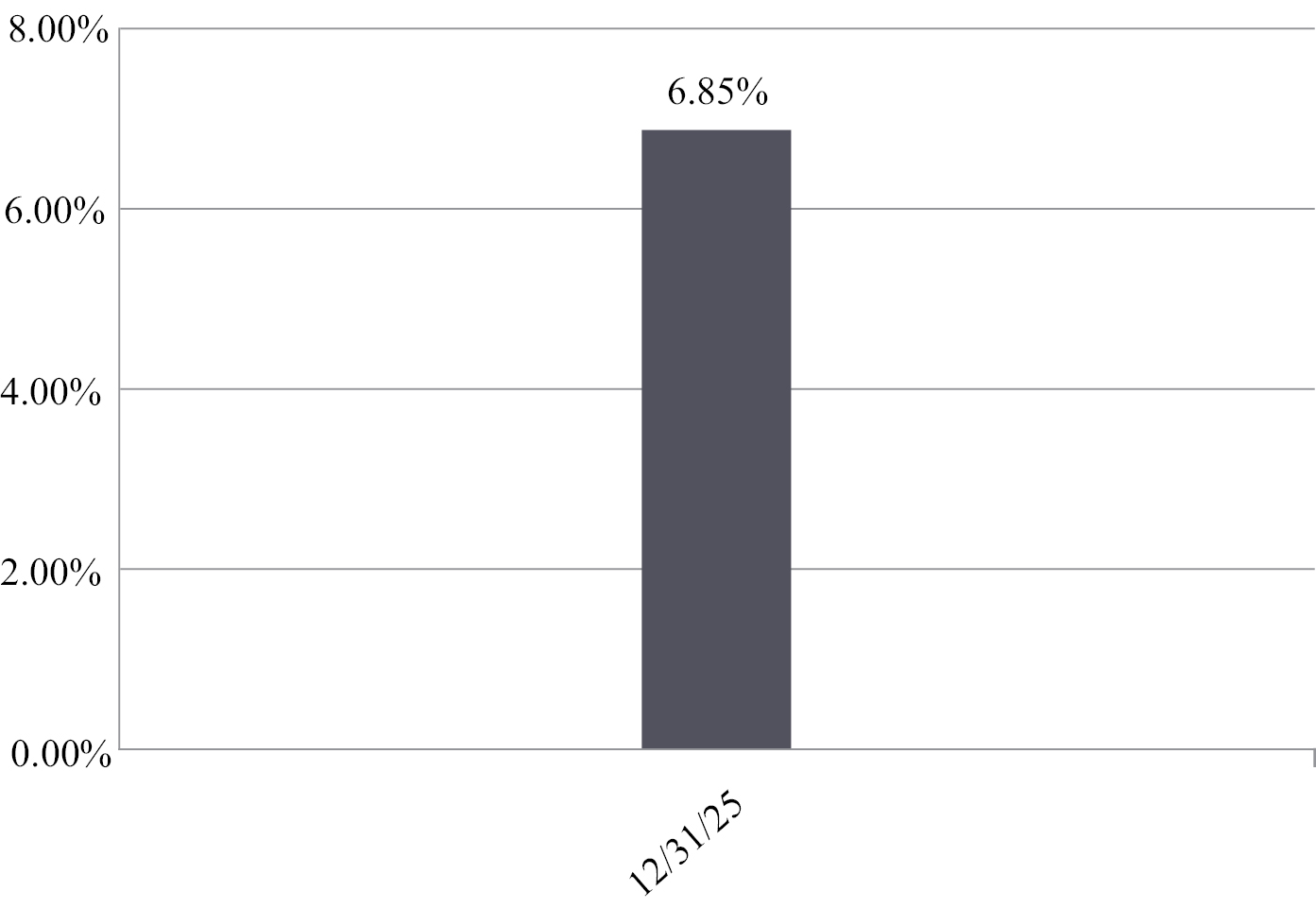
The year-to-date return for the Fund as of September 30, 2026 was 2.91%.
|
Highest Calendar Quarter Return at NAV (not-annualized): |
2.10% |
Quarter ended: 6/30/2025 |
|
Lowest Calendar Quarter Return at NAV (not-annualized): |
1.43% |
Quarter ended: 12/31/2025 |
|
Average Annual Total Returns |
One Year |
Since |
|
Return Before Taxes |
6.85% |
6.91% |
|
Return After Taxes on Distributions* |
4.93% |
4.98% |
|
Return After Taxes on Distributions and Sale of Shares* |
4.03% |
4.45% |
|
Bloomberg U.S. Corporate 1-3 Year Index (reflects no deduction for fees, expenses or taxes) |
5.88% |
4.83% |
* After-tax returns are calculated using the historical highest individual federal marginal income tax rates and do not reflect the impact of state and local taxes. Actual after-tax returns depend on an investor’s tax situation and may differ from those shown. After-tax returns shown are not relevant to investors who hold their Fund shares through tax-deferred arrangements, such as 401(k) plans or individual retirement accounts.
10
Investment Advisor
Palmer Square Capital Management LLC
Portfolio Managers
Angie K. Long, Chief Investment Officer and Portfolio Manager, and Taylor R. Moore, Managing Director and Portfolio Manager, are jointly and primarily responsible for the day-to-day management of the Fund. Ms. Long and Mr. Moore have managed the Fund since it commenced operations in 2024.
Purchase and Sale of Shares
The Fund issues and redeems Shares at NAV only in large blocks known as “Creation Units,” which only APs (typically, broker-dealers) may purchase or redeem. The Fund generally issues and redeems Creation Units in exchange for a portfolio of securities (the “Deposit Securities”) and/or a designated amount of U.S. cash. The Fund currently expects to issue Creation and Redemption Units primarily for cash because of the types of assets in which it invests.
Shares are listed on a national securities exchange, such as the Exchange, and individual Shares may only be bought and sold in the secondary market through brokers at market prices, rather than NAV. Because Shares trade at market prices rather than NAV, Shares may trade at a price greater than NAV (premium) or less than NAV (discount).
An investor may incur costs attributable to the difference between the highest price a buyer is willing to pay to purchase Shares (the “bid” price) and the lowest price a seller is willing to accept for Shares (the “ask” price) when buying or selling Shares in the secondary market. This difference in bid and ask prices is often referred to as the “bid-ask spread.”
Recent information regarding the Fund’s NAV, market price, how often Shares traded on the Exchange at a premium or discount and bid-ask spreads can be found on the Fund’s website at etf.palmersquarefunds.com.
Tax Information
The Fund’s distributions are generally taxable and will ordinarily be taxed as ordinary income or capital gains, unless you are investing through a tax-advantaged arrangement, such as a 401(k) plan or an individual retirement account. Shareholders investing through such tax-advantaged arrangements may be taxed later upon withdrawal of monies from those arrangements.
Payments to Broker-Dealers and Other Financial Intermediaries
If you purchase shares of the Fund through a broker-dealer or other financial intermediary (such as a bank), the Fund and its related companies may pay the intermediary for the sale of Fund shares and related services. These payments may create a conflict of interest by influencing the broker-dealer or other intermediary and your salesperson to recommend the Fund over another investment. Ask your salesperson or visit your financial intermediary’s website for more information.
11